WooCommerce checkout can create an order while consent mode, the cookie banner, GA4, Google Ads, enhanced conversions, and server-side uploads disagree. That creates gaps in purchase reporting and can also send data in states where the site policy says it should not.
Use this for WooCommerce stores running Google Ads, GA4, GTM, consent mode, enhanced conversions, CRM uploads, or server-side purchase tracking.
Quick answer
Cookie Banner Consent Mode Audit for WooCommerce Checkout should be handled with a narrow evidence-first workflow: test consent states, use order id, check enhanced fields, then verify the result before making broader changes.
What to check first
- Test checkout with consent denied, granted, changed after load, and no banner interaction.
- Confirm the purchase event uses the WooCommerce order ID and fires once per successful order.
- Check whether enhanced conversion fields are normalized and handled only when allowed.
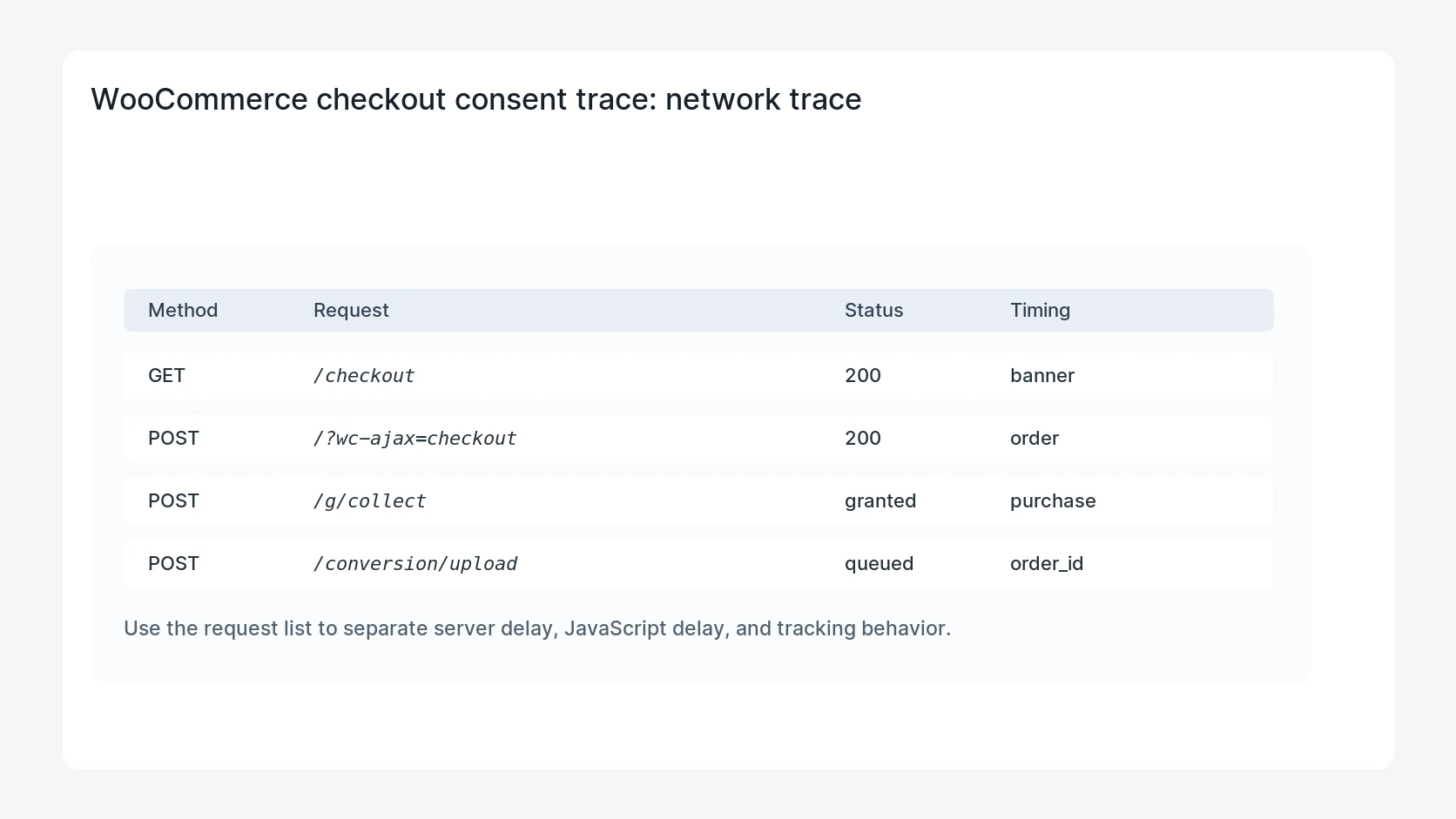
- Compare browser events, server uploads, WooCommerce order notes, and Google Ads diagnostics.
- Test refunds and cancellations if purchase value adjustments or offline uploads are used.
Diagnostic table
Use this table to keep the work practical. It connects the symptom to evidence and a verification step.
| Action | Evidence to collect | How to verify |
|---|
| Test consent states | Test checkout with consent denied, granted, changed after load, and no banner interaction. | Purchase tracking fires once per paid order when consent allows it. |
| Use order ID | Confirm the purchase event uses the WooCommerce order ID and fires once per successful order. | Denied consent does not send restricted identifiers under the site's policy. |
| Check enhanced fields | Check whether enhanced conversion fields are normalized and handled only when allowed. | Browser and server events use the same order ID. |
| Compare diagnostics | Compare browser events, server uploads, WooCommerce order notes, and Google Ads diagnostics. | Refund and cancellation logic does not create duplicate purchases. |
Useful command or data shape
Adapt paths, IDs, and privacy handling to the site before running commands or storing data on production.
purchase_event:
  order_id: WC-10492
  consent_state: granted
  event_source: checkout_complete
  browser_purchase_sent: true
  server_upload_queued: true
  enhanced_conversions_allowed: true
Safe fix order
Do the work in a sequence that makes each result easy to prove. Stop if a step produces new evidence that changes the incident scope.
- Test consent states
- Use order ID
- Check enhanced fields
- Compare diagnostics
- Test refund path
Production verification checklist
- Purchase tracking fires once per paid order when consent allows it.
- Denied consent does not send restricted identifiers under the site's policy.
- Browser and server events use the same order ID.
- Refund and cancellation logic does not create duplicate purchases.
Mistakes to avoid
- Do not judge the fix by one browser or the homepage only.
- Do not delete evidence before recording usernames, file paths, timestamps, and response headers.
- Do not add a cache, security, or tracking plugin while the original problem is still unclear.
- Do not leave test users, temporary debug logs, or broad API keys active after verification.
When HandL WP should help
Bring in help when this affects leads, checkout, search visibility, malware risk, paid media reporting, or a client production site. HandL WP can trace the issue through WordPress, hosting, cache, tracking, and Search Console, then verify the workflow after the technical fix.
If this is active on a production site, audit WooCommerce checkout tracking.
Related HandL WP guides
Use these related guides when the same issue touches tracking, security, checkout, or crawler visibility.
Helpful references