A marketer made the calls. Dish faced a $61 million judgment.
Buying leads or hiring an intake vendor? Know what happens before your firm contacts a prospect. These cases outside legal intake show why outreach practices matter. We help you screen inquiries and keep consent records together.
Tell us how your firm acquires consumer inquiries. We will reply with clear next steps.
Is this page for you?
Does any of this sound familiar? Select the practices that apply to your firm, then review the records and questions below. This checklist is a starting point for reviewing your process, not a legal risk assessment.
Select any that apply, or go straight to the evidence below.
Why documented intake matters now
When a question arises about an inquiry, your firm needs a clear record of what the person agreed to and how the inquiry was screened. Keep consent evidence and screening results together so your team can review them.
When lead generation leads to litigation
These cases outside legal intake show what can happen when lead generation and outreach break down. Read the highlighted sentence — then open the source if you want the full document.
Fourth Circuit · Krakauer v. Dish Network
A $61 million judgment over a marketer's calls
In Krakauer v. Dish Network, a federal appeals court upheld a judgment exceeding $61 million for calls to numbers on the Do-Not-Call registry. A third-party marketer made the calls, but the jury found it acted as Dish's agent. Hiring an outside marketer did not shield Dish from liability in this case.
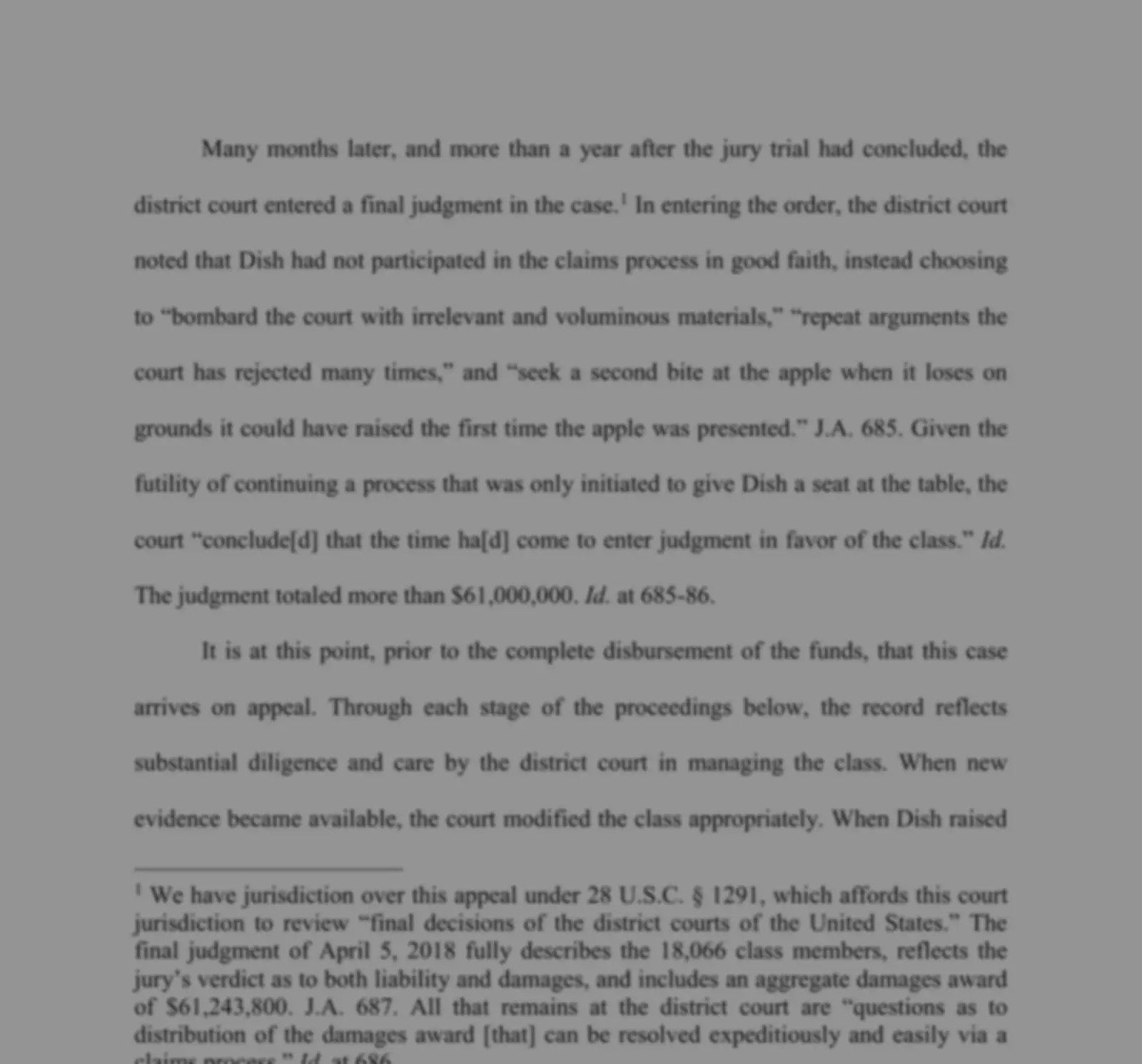
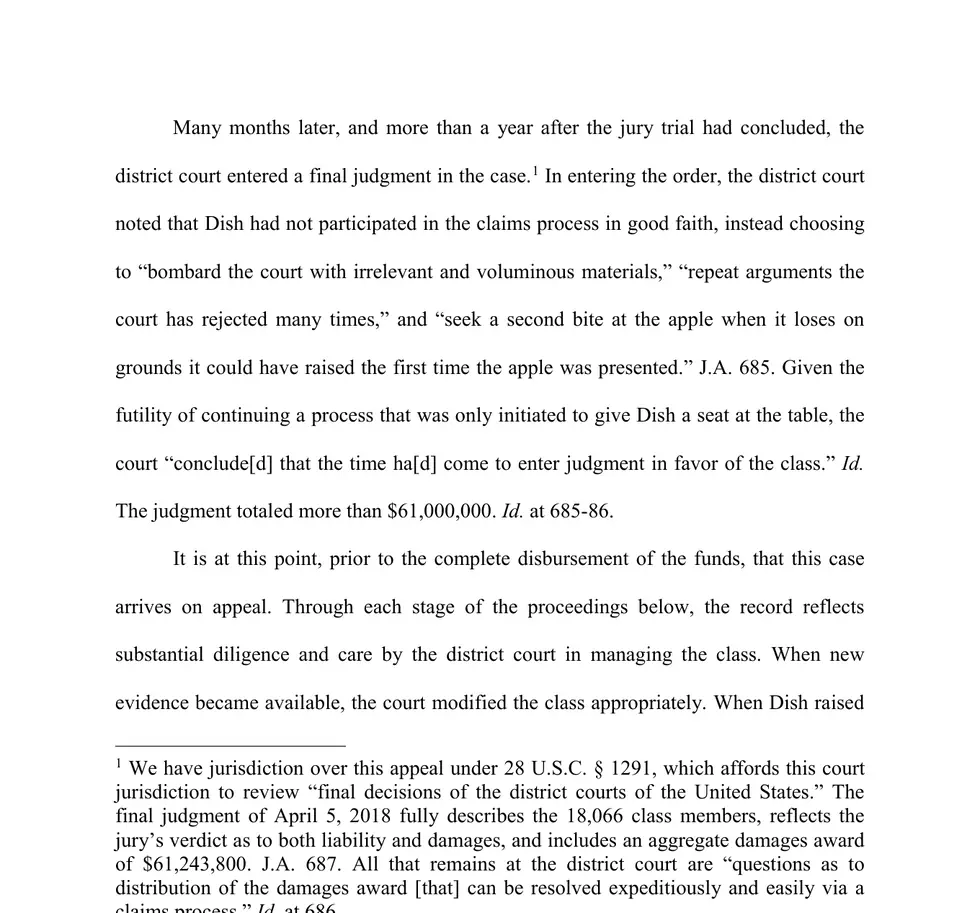
The judgment totaled more than $61,000,000.
The jury found that SSN was acting as Dish’s agent when it made the calls in violation of the TCPA.
Source document thumbnail — open the full record above.
U.S. Department of Justice · 2024
A lead seller barred from collecting and selling consumer information
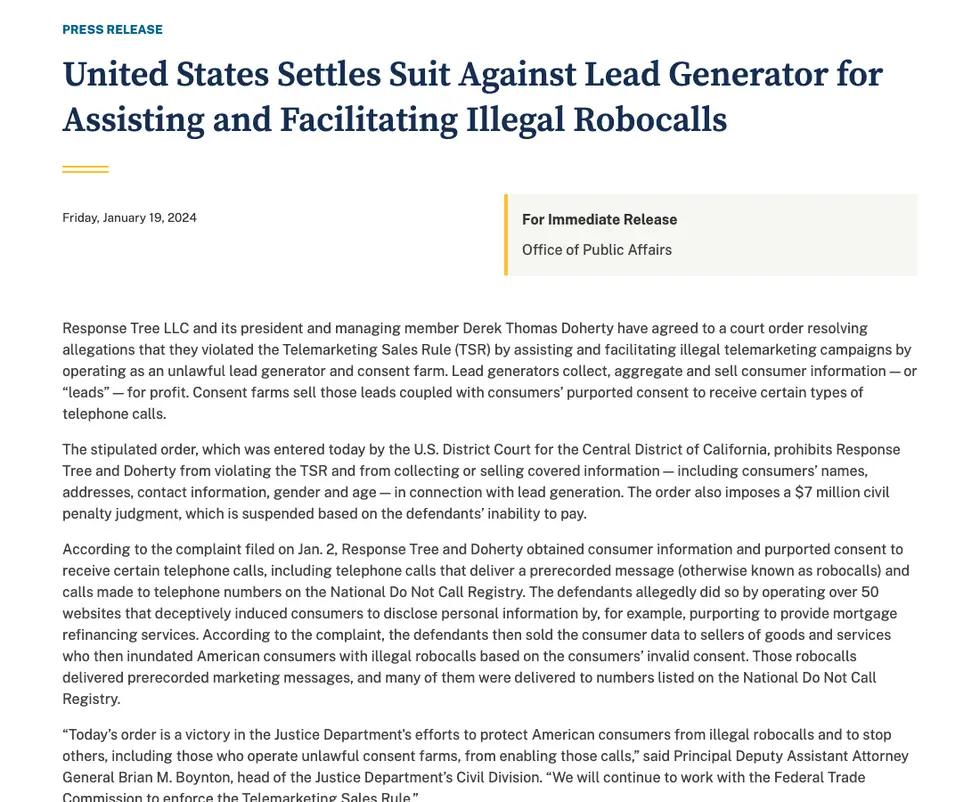
In 2024, Response Tree and its president agreed to a court order restricting their lead-generation business. The government alleged that deceptive websites collected consumer information and purported consent that was used for illegal robocalls. The order included a $7 million civil penalty judgment, suspended because the defendants could not pay.
The defendants allegedly did so by operating over 50 websites that deceptively induced consumers to disclose personal information by, for example, purporting to provide mortgage refinancing services. According to the complaint, the defendants then sold the consumer data to sellers of goods and services who then inundated American consumers with illegal robocalls based on the consumers’ invalid consent.
The order also imposes a $7 million civil penalty judgment, which is suspended based on the defendants’ inability to pay.
Source document thumbnail — open the full record above.
47 U.S.C. § 227(b)(3)
Federal private right of action — in the statute’s own words
Federal law creates a private right of action. Damages figures below are the statute’s wording, not a marketing formula.
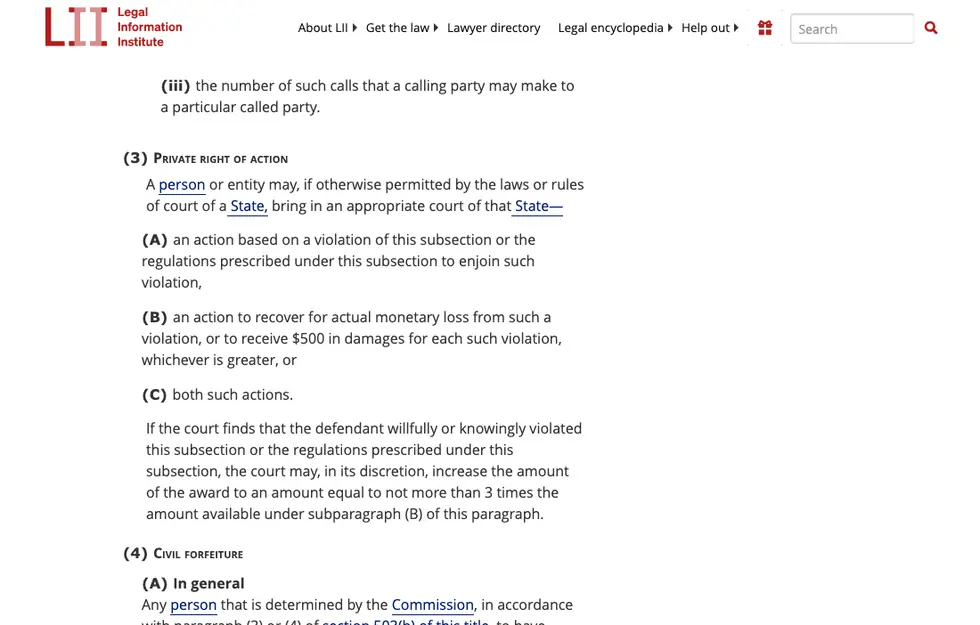
A person or entity may, if otherwise permitted by the laws or rules of court of a State, bring in an appropriate court of that State—
(A) an action based on a violation of this subsection or the regulations prescribed under this subsection to enjoin such violation,
(B) an action to recover for actual monetary loss from such a violation, or to receive $500 in damages for each such violation, whichever is greater, or
(C) both such actions.
If the court finds that the defendant willfully or knowingly violated this subsection or the regulations prescribed under this subsection, the court may, in its discretion, increase the amount of the award to an amount equal to not more than 3 times the amount available under subparagraph (B) of this paragraph.
Source document thumbnail — open the full record above.
State private rights of action
State statutes also open a private right of action
State mini-TCPA statutes also let a private party sue. Quoted lines below are the statutes’ own private-right-of-action text.
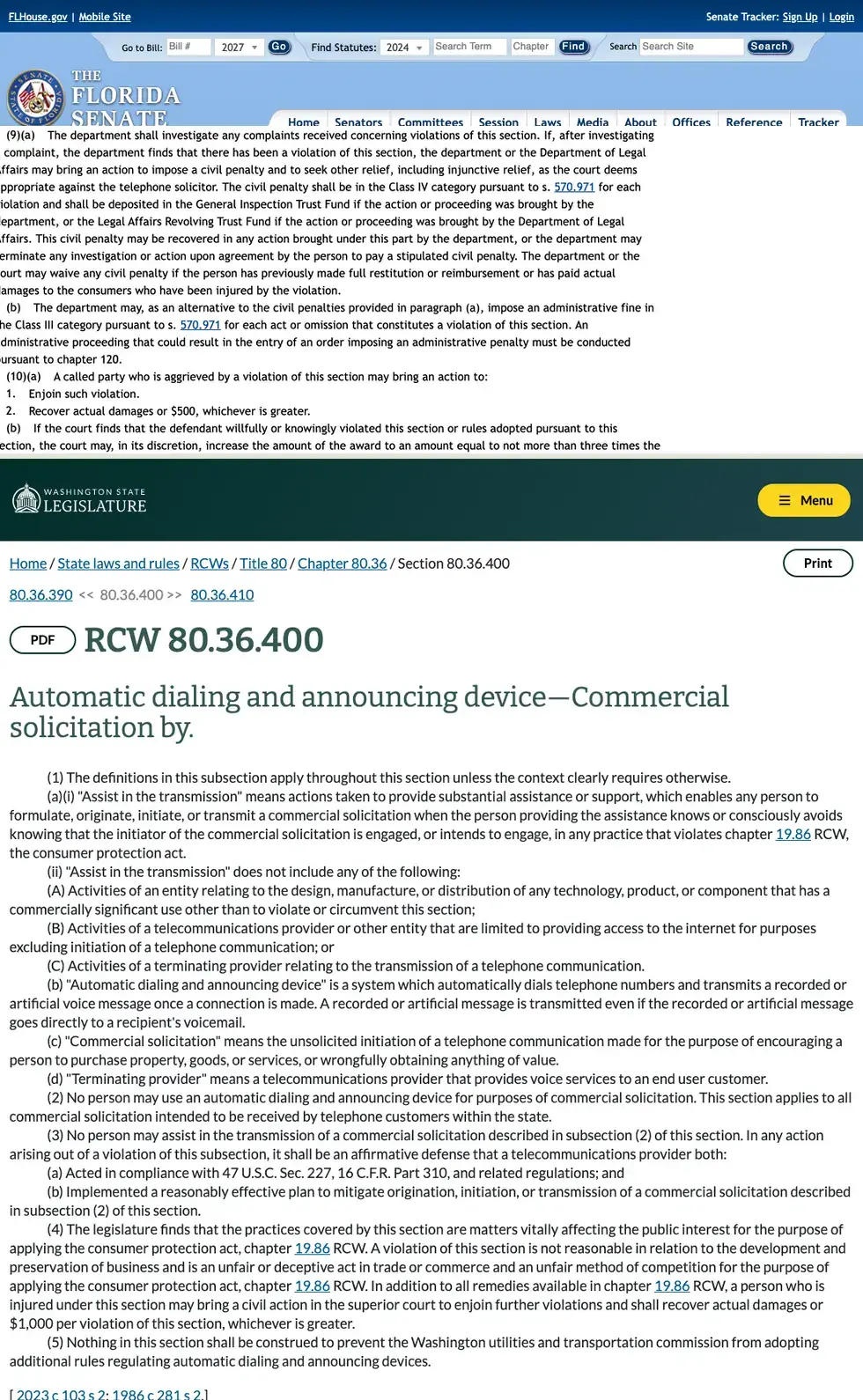
A called party who is aggrieved by a violation of this section may bring an action to:
1. Enjoin such violation.
2. Recover actual damages or $500, whichever is greater.
In addition to all remedies available in chapter 19.86 RCW, a person who is injured under this section may bring a civil action in the superior court to enjoin further violations and shall recover actual damages or $1,000 per violation of this section, whichever is greater.
One inquiry. One bundle. Disclosures shown, consent captured, screening result, and timestamps — ready when someone asks what happened.
Disclosure shown
Consent captured
Screening result
Timestamps
What screening covers
Consent and disclosure evidence
Keep a record of the disclosures shown and the consent captured when an inquiry was submitted, so your team can review what the person agreed to.
Real-time intake screening
Screen inquiries for potential litigation risk before they reach your intake team.
Duplicate and do-not-contact suppression
Screen for duplicates and do-not-contact matches to help your team avoid repeat inquiries and unwanted outreach.
Fraud and bot protection
Help identify and filter suspected bot activity and fraudulent submissions before they reach your intake team.
Route inquiries that pass screening
Send inquiries that pass screening to the right people on your team for review.
Reporting and defensible records
Keep an audit trail of screening outcomes and consent evidence so your firm can show what happened when it matters.
Supports your compliance process; it is not legal advice or a guarantee of compliance.
Review your intake process before your next campaign
Can your team retrieve the disclosures shown, the consent captured, and the screening results for an inquiry? We can help you screen incoming inquiries and keep those records together.